 Broderick Adams
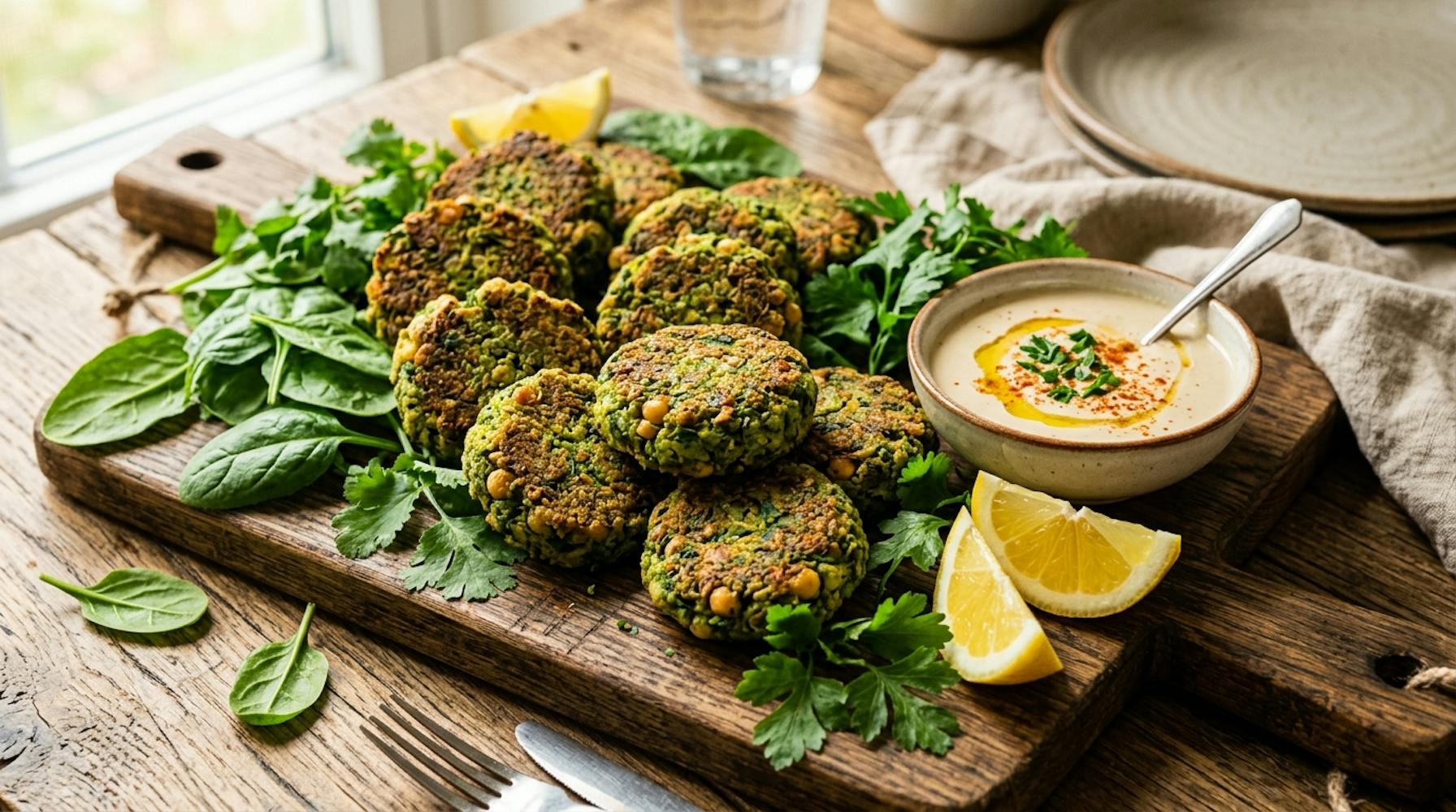
It's happening again, that spinach you bought is sitting back there and you have that familiar thought, "What can I even do with this much spinach." That’s exactly how this spinach falafel came to life in our kitchen, and honestly, it’s become one of our favorite things to make.
If you’ve ever made a traditional falafel, you know the basics: chickpeas, garlic, cumin, herbs, a little flour to hold everything together, and heat. What you might not know is how naturally that formula adapts to whatever fresh greens are available — and spinach, it turns out, is one of the best additions you can make.
On Improvising in the Kitchen
There’s a certain confidence that comes from cooking long enough to stop following every recipe word for word. Ingredients run out, harvests don’t always produce exactly what you planned for, and the farmers market doesn’t always have what the recipe called for. Learning to improvise isn’t just a useful skill — it’s one of the most liberating things that can happen to a home cook.
Falafel is a particularly forgiving recipe to improvise with. The foundational ratios — legumes, aromatics, binding agent, fat — are flexible enough to absorb substitutions without losing the soul of the dish. No fresh parsley? Cilantro works. Out of dried chickpeas? Canned chickpeas (well-drained) will do the job. Have a pile of fresh spinach from the garden that’s about to turn? That’s not a problem. That’s an opportunity.
We talk about no-waste cooking a lot around here, and spinach falafel is one of the best examples of that philosophy in action. Instead of watching beautiful fresh spinach wilt past its prime at the back of your crisper drawer, you turn it into something extraordinary.
Why Spinach Works So Well in Falafel
Spinach brings a few things to the table that traditional falafel recipes don’t always have:
- Color — Spinach gives the falafel a vivid, deep green interior that looks stunning when you cut one open. It’s dramatic and beautiful in a way that plain chickpea falafel just isn’t.
- Moisture — Fresh spinach adds just enough moisture to help the mixture bind without becoming soggy, as long as you handle it correctly (more on that in a moment).
- Nutrition — Spinach is rich in iron, vitamins A and K, and folate. Combined with the plant-based protein in chickpeas, this becomes a genuinely nutritious meal with no real effort required.
- Flavor — The mild earthiness of spinach complements cumin, coriander, and garlic in a way that feels natural. It doesn’t overpower — it deepens.
And if you’ve been wondering how to store fresh spinach properly so it lasts long enough to use in recipes like this, keeping it in a damp paper towel inside a sealed bag in the coldest part of your refrigerator will buy you several extra days.
Spinach Falafel Recipe
This recipe serves 3–4 people as a main course, or 6 as an appetizer or side dish. It works baked or pan-fried — we’ve given instructions for both below.
Ingredients
- 2 cans (15 oz each) chickpeas, drained and thoroughly dried — or 1 cup dried chickpeas soaked overnight (not cooked)
- 3 cups fresh spinach, packed
- 4 cloves garlic
- 1 small yellow onion, roughly chopped
- 1/2 cup fresh parsley or cilantro (or a mix) — substitute with 2 tsp dried herbs if needed
- 1 1/2 tsp cumin
- 1 tsp ground coriander
- 1/2 tsp smoked paprika
- 3/4 tsp salt (plus more to taste)
- 1/4 tsp black pepper
- 3 tbsp all-purpose flour or chickpea flour — use chickpea flour for gluten-free
- 1/2 tsp baking soda (if baking) or baking powder (if frying)
- 2 tbsp olive oil (for baking) or neutral oil (for frying)
- Juice of half a lemon
A Note on Substitutions
This is the part where improvisation really shines. Here’s what you can swap without compromising the final dish:
- Spinach: Kale (remove tough stems), arugula, beet greens, chard — any leafy green from the garden works here. Blanch tougher greens briefly first.
- Parsley/cilantro: Basil, carrot tops, or radish greens (see our radish green pesto for another great way to use those tops).
- Chickpeas: White beans or fava beans work in a pinch, though the texture will be slightly softer.
- Flour: Oat flour, almond flour in a small pinch — but chickpea flour is our favorite for flavor consistency.
- Cumin/coriander: If you’re out, a tablespoon of your favorite curry powder covers both and adds a nice warmth.
Instructions
- Dry the chickpeas well. This is the most important step. If using canned chickpeas, spread them on a clean kitchen towel and pat them as dry as possible. Excess moisture makes falafel fall apart. Let them air dry for 10–15 minutes if you have time.
- Prepare the spinach. Roughly chop the fresh spinach. If it’s particularly wet from washing, squeeze it in a clean towel to remove extra moisture. You don’t need to cook it.
- Pulse the base. In a food processor, combine the chickpeas, spinach, garlic, onion, parsley or cilantro, lemon juice, and all the spices. Pulse 15–20 times until the mixture is coarsely ground — it should look like coarse wet sand, not a smooth paste. Over-processing is the most common mistake; it makes the falafel dense and gummy.
- Add the binder. Sprinkle in the flour and baking soda or powder. Pulse 3–4 more times just to incorporate. Taste and adjust salt.
- Rest the mixture. Transfer to a bowl, cover, and refrigerate for at least 30 minutes. This step is optional if you’re in a hurry, but it makes the falafel significantly easier to shape and helps them hold together better during cooking.
- Shape. Using your hands or a small ice cream scoop, form the mixture into balls or patties about the size of a golf ball. Flatten slightly for faster, more even cooking.
To Bake (Preferred Method)
Preheat oven to 400°F. Line a baking sheet with parchment and brush or drizzle it generously with olive oil. Arrange falafel on the sheet, brush or drizzle the tops with a little more oil, and bake for 25–30 minutes, flipping halfway, until deeply golden and firm to the touch.
To Pan-Fry
Heat a generous layer of neutral oil (about 1/4 inch deep) in a heavy skillet over medium-high heat. Working in batches, cook the falafel 3–4 minutes per side until deeply browned. Drain on a paper towel and season with a pinch of salt immediately.
What to Serve It With
Falafel is extraordinarily flexible. Here are some serving ideas that work well with the spinach version:
- Classic: Warm pita, sliced cucumber, tomato, red onion, and tahini or yogurt sauce
- Bowl style: Over rice or farro with roasted vegetables, herbs, and a lemon-herb vinaigrette (our lemon herb vinaigrette is a perfect match)
- Salad: Over a big green salad with the tahini dressing from the recipe below
- Appetizer: Served on a platter with hummus, olives, and warm flatbread
Simple Tahini Sauce
- 3 tbsp tahini
- 2 tbsp lemon juice
- 1 clove garlic, minced
- 2–3 tbsp warm water to thin
- Salt to taste
Whisk everything together until smooth. Adjust consistency with water. This sauce keeps in the refrigerator for up to a week and goes with almost everything.
A Few Things That Can Go Wrong (and How to Fix Them)
Because this is an improvised recipe, it helps to know what the warning signs look like before cooking:
- Mixture is too wet: Add another tablespoon of flour and refrigerate longer. If it’s really wet, a tablespoon of breadcrumbs can help absorb moisture quickly.
- Falafel are falling apart in the pan: The mixture wasn’t dry enough, or they weren’t chilled. Try refrigerating the shaped falafel for another 15 minutes before cooking, and make sure your oil is properly hot before adding them.
- Mixture is too dry: Add a small splash of water or olive oil and pulse briefly.
- Flavor feels flat: Add more salt, a squeeze of lemon, and a pinch of cumin. Taste the raw mixture before you cook — it should be well-seasoned going in.
The Bigger Lesson
The real point of this recipe isn’t the falafel. It’s the reminder that cooking doesn’t have to be rigid to be good. When you understand the why behind a recipe — why the chickpeas need to be dry, why you don’t over-process, why the resting step matters — you can bend the recipe in whatever direction your pantry or your garden is pointing you.
That flexibility is one of the most valuable things about cooking with locally grown, farm-fresh produce. The vegetables you bring home don’t always match the ingredient list in whatever recipe you found online. But that’s not a limitation — it’s an invitation to make something your own and to eat seasonally!
This spinach falafel started as an improvisation and quickly became a staple.
Made this recipe? We’d love to see your version — especially if you improvised something we haven’t thought of yet.