 Broderick Adams
Welcome or welcome back to the blog! I am up early and at it again doing a dive on a legume that has been a kitchen staple all across the Americas.
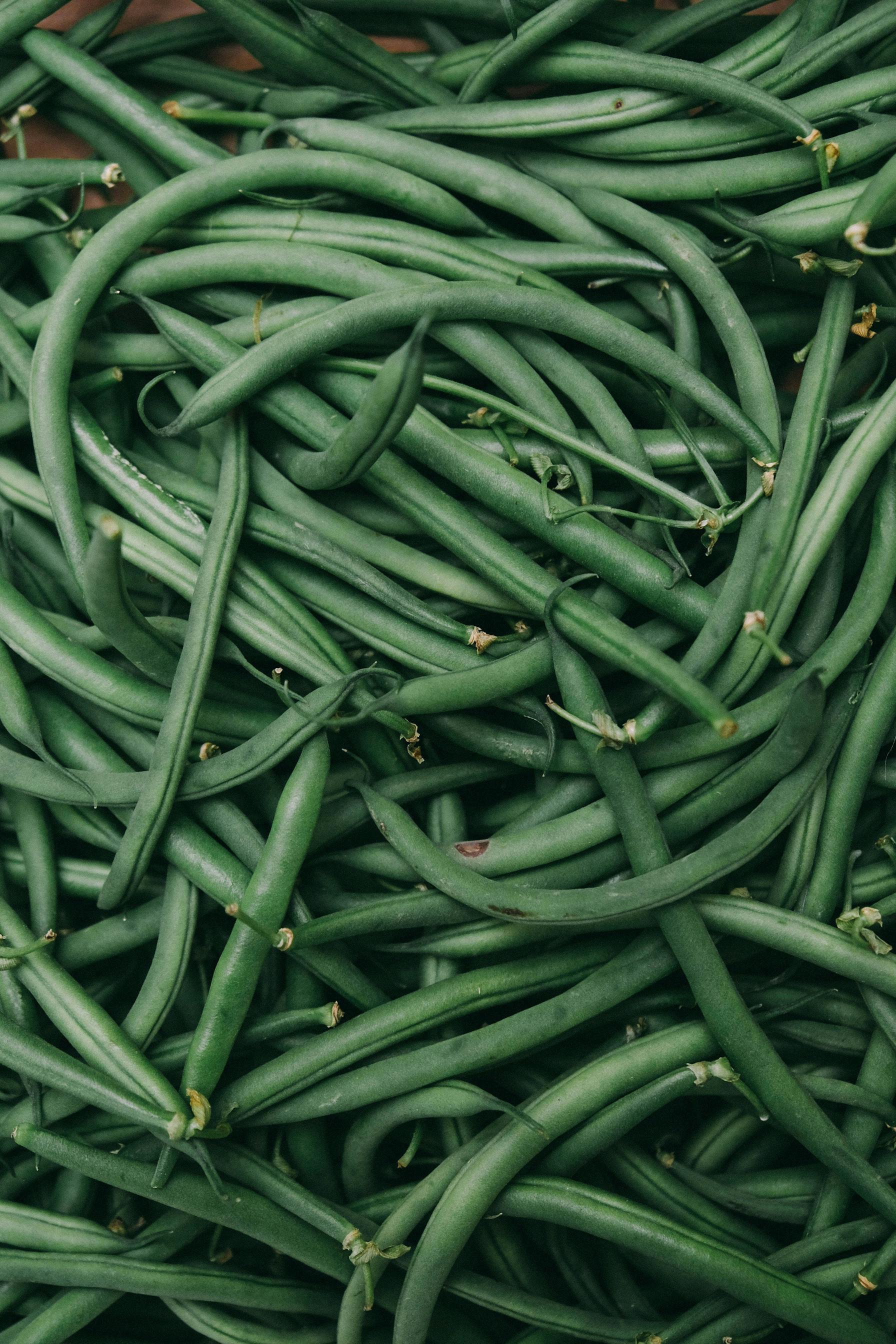
This week we dive into the fascinating world of Phaseolus vulgaris—the species behind green beans (also known as snap beans, string beans, or bush beans) and a whole pantry of dried beans you already know and love. From ancient Mesoamerican fields to modern farm stands, this slender, snappable pod has a story as layered as a perfectly tender stir-fry.
The History of the Pod
The true birthplace of the common bean is the Americas. Phaseolus vulgaris originated in Mesoamerica and the Andes, where it has been cultivated for thousands of years. Archaeological evidence suggests that beans were domesticated independently in two separate regions—Central America and South America—as far back as 7,000 to 8,000 years ago, making them one of humanity's oldest and most important crops.
For ancient civilizations like the Aztecs, Maya, and Inca, beans were a dietary cornerstone, often grown alongside corn and squash in the famous "Three Sisters" companion planting system. The beans climbed the corn stalks, the squash shaded the soil, and the beans returned nitrogen to the earth—a brilliant act of agricultural teamwork. While most of these early beans were grown for their dried seeds, somewhere along the way people discovered the joy of eating the entire immature pod, tender and snappable.
When European explorers arrived in the Americas, they carried beans back across the Atlantic in the 16th century. Beans spread rapidly through Europe, Africa, and Asia, adapting to countless local cuisines. The "stringless" green bean we enjoy today is a relatively modern innovation—in 1894, American horticulturist Calvin Keeney earned the nickname "Father of the Stringless Bean" by breeding varieties without the tough fibrous string that once ran along the pod's seam.
Bush Beans vs. Pole Beans
Here's a fun bit of garden trivia: green beans come in two main growth habits. Bush beans grow into compact, self-supporting plants about one to two feet tall, producing their entire crop over a few short weeks—perfect for gardeners who want a quick, concentrated harvest. Pole beans, on the other hand, are vigorous climbers that need a trellis or support and produce continuously over a longer season. So the next time you're planning your garden, you can confidently choose: bush beans for speed and convenience, pole beans for a steady, season-long supply!
The Diversity of the Bean
The species Phaseolus vulgaris is astonishingly diverse, with centuries of selective breeding producing a remarkable range of pods and seeds:
- Snap/Green Beans: Harvested young and eaten whole, including classic green varieties, yellow "wax" beans, and purple-podded types.
- Haricot Vert: The slender, elegant French-style green bean, prized for its delicate texture.
- Romano Beans: Flat, broad Italian pods with a rich, meaty flavor.
- Dry Beans: The same species left to mature, giving us kidney, pinto, black, navy, and cannellini beans.
Modern breeding has focused on stringless pods, disease resistance, uniform ripening for mechanical harvesting, and vibrant colors—giving us crisp, tender beans in gardens and grocery stores year-round.
The Symbiotic Relationship: Nitrogen Fixing
One of the most remarkable aspects of green beans—and all legumes—is their ability to partner with soil bacteria to "fix" nitrogen from the air, naturally enriching the soil they grow in. This is a true symbiotic relationship, where both the plant and the bacteria benefit from working together.
In this partnership, Rhyzobium bacteria take nitrogen gas from the air and convert it into ammonium, a usable fertilizer for the bean plant. Nitrogen is one of the most essential nutrients for plant growth, but most plants can't use the nitrogen gas that makes up the majority of our atmosphere. These specialized bacteria perform a kind of biological alchemy, transforming that inaccessible atmospheric nitrogen into a form the plant can readily absorb and use.
In exchange, the bean plant provides necessary carbohydrates, carbon, and energy for the bacteria. The plant forms special structures called root nodules where the bacteria live, creating a protected home in return for the steady supply of fertilizer. It's a beautiful give-and-take that benefits both organisms—and the surrounding soil as well. This is why legumes like green beans were such a vital part of the "Three Sisters" planting system, replenishing the soil with nitrogen for the corn and squash growing alongside them.
This is a high level view of this relationship but I highly encourage you to read more about this process because it is so fascinating that I could write a whole blog about it.
Fun Facts About Green Beans
- The Stringless Revolution: Before 1894, eating green beans meant painstakingly removing the tough string from every pod by hand.
- One Plant, Many Names: Green bean, snap bean, string bean, and bush bean can all refer to the very same vegetable.
- A Casserole Icon: The classic American green bean casserole was invented in 1955 by Dorcas Reilly at the Campbell Soup Company test kitchen.
- Global Production: China and Indonesia are among the world's largest producers of green beans, growing many millions of metric tons annually.
- Snap Test: A truly fresh green bean will break cleanly with a crisp snap—a built-in freshness test you can hear!
Nutritional Value
Beyond their satisfying crunch, green beans pack impressive nutritional benefits. They bridge the gap between vegetable and legume, offering a unique blend of nutrients:
- Fiber Friendly: A good source of dietary fiber that supports healthy digestion and steady blood sugar.
- Heart Health: Rich in potassium and folate, supporting healthy blood pressure and cardiovascular function.
- Antioxidant Power: Contains flavonoids, carotenoids, and Vitamin C that combat oxidative stress and inflammation.
- Bone Support: An excellent source of Vitamin K, essential for bone health and proper blood clotting.
- Plant Protein: Offers a modest dose of protein along with iron and manganese.
- Low Calorie: At roughly 31 calories per cup, green beans are a guilt-free, nutrient-dense addition to any plate.
Bonus Recipe: Garlic Butter Green Beans with Oyster Mushrooms
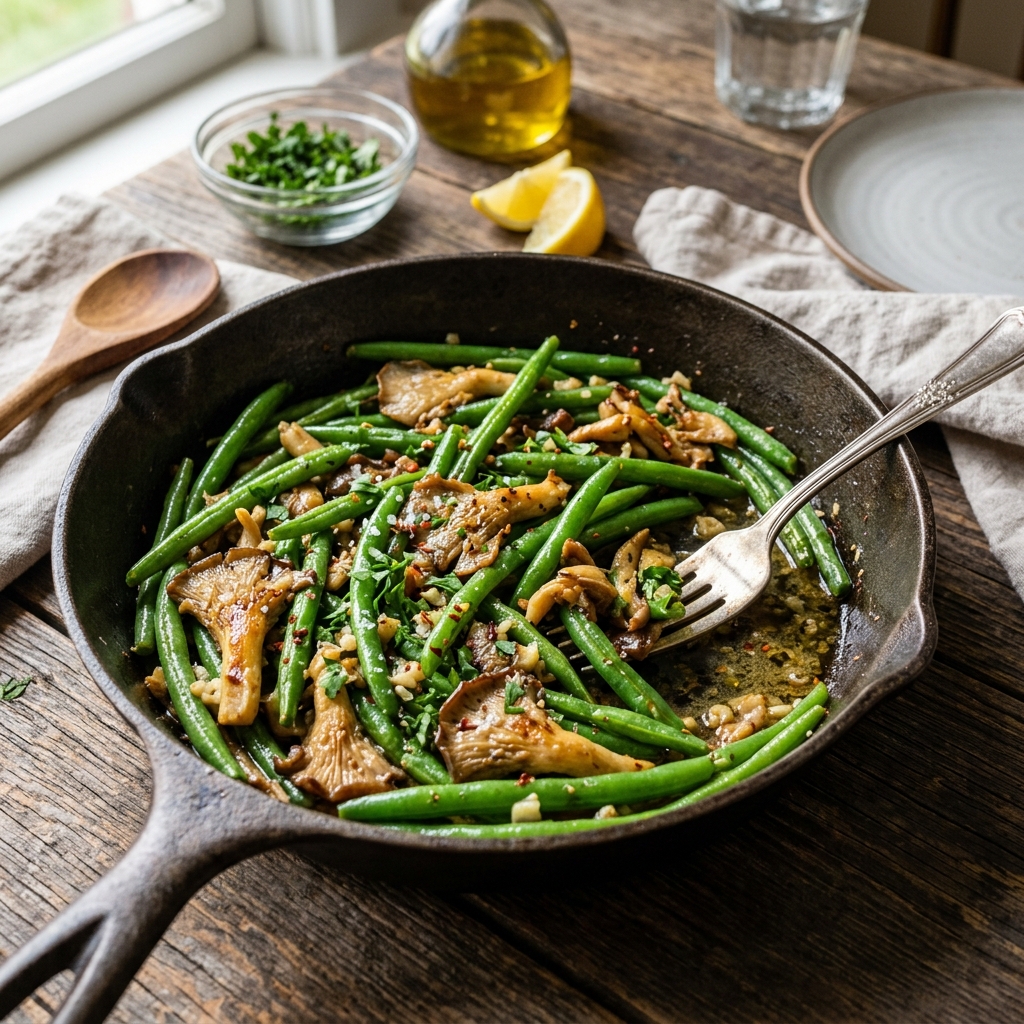
This easy stovetop recipe transforms humble green beans into a savory, restaurant-worthy side dish. The earthy oyster mushrooms and rich garlic butter make the beans sing—perfect alongside any main course or enjoyed on their own.
Ingredients:
- 1 lb fresh green beans, with ends trimmed or cut into bite-sized pieces
- 6 oz oyster mushrooms, torn into bite-sized pieces
- 3 tbsp butter, divided
- 1 tbsp olive oil
- 4 cloves garlic, minced
- ½ tsp salt (plus more to taste)
- ¼ tsp black pepper
- ¼ tsp red pepper flakes (optional, for heat)
- 1 tbsp fresh lemon juice
- 2 tbsp fresh parsley, chopped (optional, for garnish)
Instructions:
- Blanch (optional but recommended): Bring a pot of salted water to a boil. Add the green beans and cook for 2–3 minutes until bright green and just tender. Drain and set aside. This keeps the beans vibrant and crisp-tender.
- Sear the Mushrooms: Heat the olive oil and 1 tbsp butter in a large skillet over medium-high heat. Add the oyster mushrooms in a single layer and cook undisturbed for 2–3 minutes, then stir and cook another 2 minutes until golden and lightly crisp. Remove and set aside.
- Cook the Beans: In the same skillet, melt the remaining 2 tbsp butter over medium heat. Add the green beans and toss to coat, cooking for 3–4 minutes until heated through and slightly blistered.
- Add Garlic: Stir in the minced garlic, salt, pepper, and red pepper flakes. Cook for 1 minute, stirring constantly, until the garlic is fragrant (be careful not to burn it).
- Combine: Return the mushrooms to the skillet and toss everything together for another minute to marry the flavors.
- Finish: Remove from heat, drizzle with fresh lemon juice, and garnish with chopped parsley. Taste and adjust seasoning, then serve warm.
Stay Connected
Want more kitchen tips, vegetable spotlights, and updates from the garden?
Let us know—what vegetable rabbit hole dive should we feature in our next blog? We love hearing from our community!