 Broderick Adams
Eggplant. Aubergine. Brinjal.
However you say it, the eggplant is one of the most fascinating vegetables we grow here at Emory Market Gardens — and one of the most misunderstood. People tend to think of eggplant as a single thing: that big, glossy, deep-purple orb you see at the grocery store. But the world of eggplant is so much wider, weirder, and more wonderful than that.
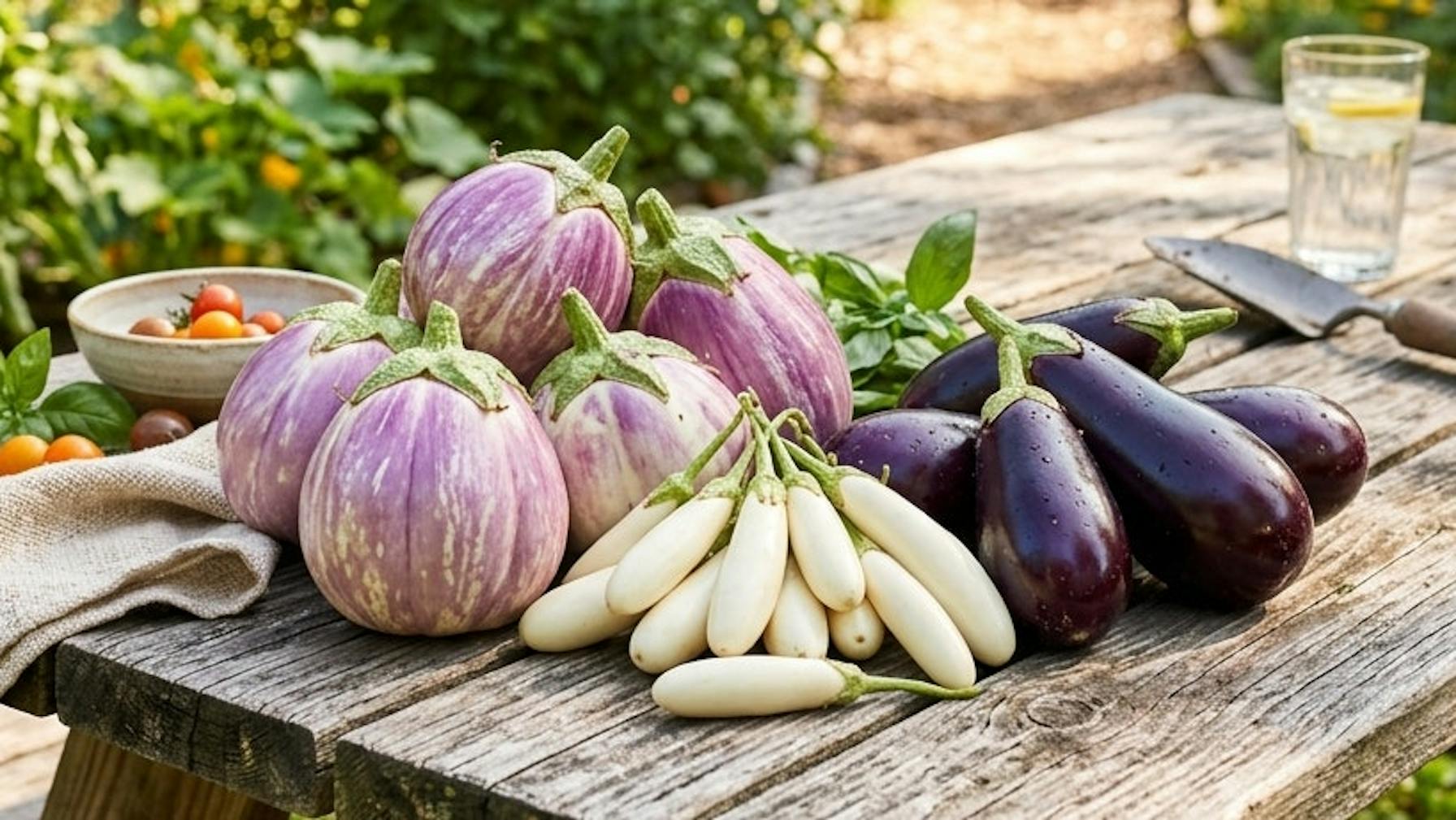
This year, we're growing three distinct varieties — E-tender, Rosa Bianca, and Gretel — and each one brings something completely different to the table.
From a slender Japanese-style eggplant tender enough to eat raw, to a creamy Italian heirloom, to a cluster of adorable mini eggplants harvested young, these three varieties show off just how much range this plant really has.
Below, we'll walk through each one's unique characteristics, flavor, and nutrition — plus a recipe tailored to each variety's size and texture.
A Few Fascinating Eggplant Facts
Before we get into the varieties, let's clear up a few things about this beautiful, baffling vegetable:
- It's technically a berry. Botanically speaking, eggplant is a fruit — and more specifically, a berry. It belongs to the nightshade family, right alongside tomatoes, peppers, and potatoes.
- The E-tender can be eaten raw. Most eggplant varieties are unpleasantly bitter and spongy when raw, but the E-tender is so mild and tender that you can slice it up and eat it fresh — no cooking required. More on that below.
- The name comes from white varieties. Early European eggplants were small, white, and egg-shaped — hence "eggplant." The purple version we know today came later.
- Color comes from antioxidants. That deep purple skin is packed with nasunin, a powerful antioxidant that gives eggplant much of its nutritional punch.
E-tender: The Eggplant You Can Eat Raw
The E-tender is the showstopper of our eggplant lineup, and not just because of its slender, elegant shape. This Japanese-style eggplant has remarkably thin, delicate skin and a tender, low-bitterness flesh that sets it apart from nearly every other variety out there.
Unique Characteristics
E-tenders grow long and slim, with smooth, glossy purple skin. Their flesh is creamy and contains very few seeds, which is exactly why they're so gentle in flavor. Most importantly, they live up to their name — they're tender enough to be eaten raw, a rare trait in the eggplant world.
Flavor Profile
Mild, subtly sweet, and never bitter. Raw, the E-tender is crisp and almost cucumber-like with a faint nuttiness. Cooked, it turns silky and absorbs flavors beautifully.
Nutrition
Low in calories and high in fiber, the E-tender offers antioxidants (including skin-based nasunin), potassium, and a good dose of folate — all while being light enough to eat in quantity.
Recipe: Raw E-tender Carpaccio
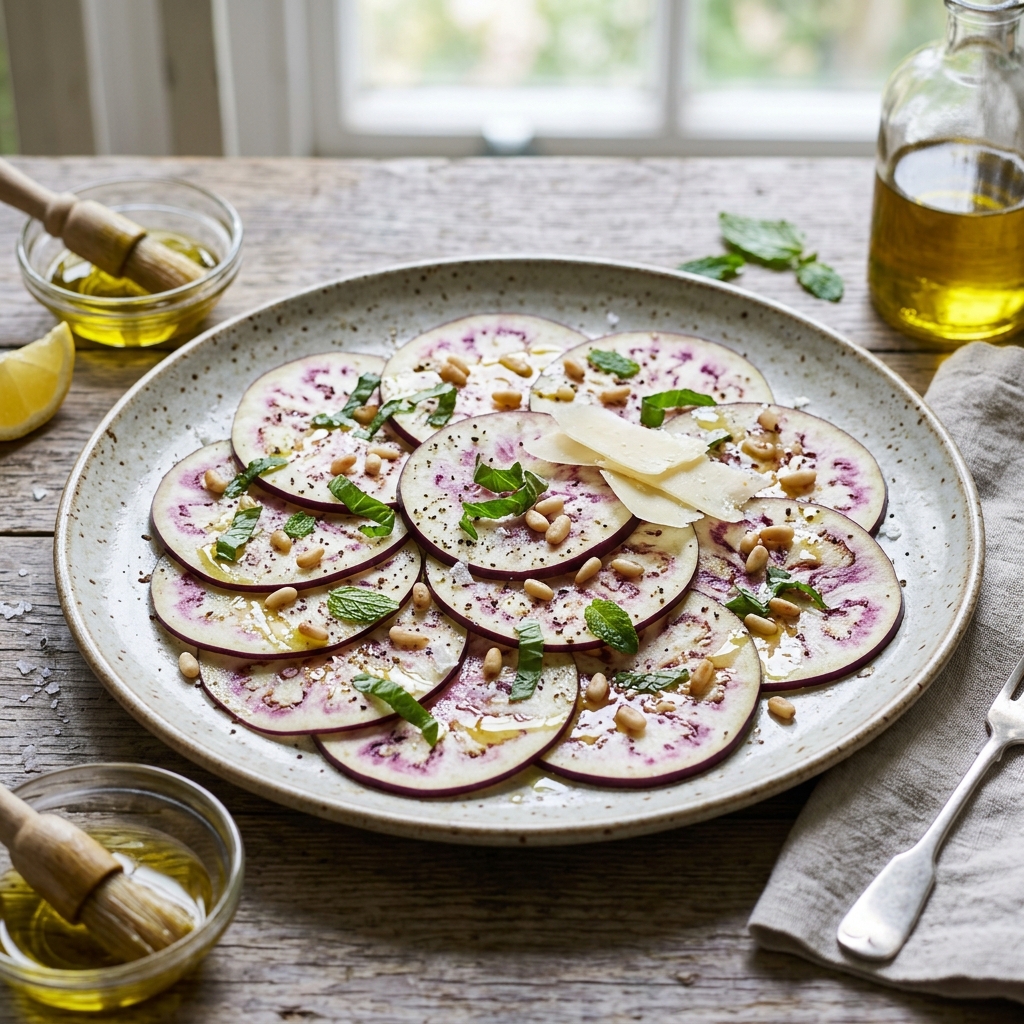
Because the E-tender is slender and tender enough to eat raw, it's perfect for a no-cook preparation that lets its delicate flavor shine. This serves 2–4 as a light starter.
Ingredients
- 2 medium E-tender eggplants, thoroughly washed
- 2 tbsp extra-virgin olive oil
- Juice of 1/2 lemon
- Flaky sea salt, to taste
- Freshly cracked black pepper
- A small handful of fresh basil or mint, torn
- Optional: shaved Parmesan or toasted pine nuts
Instructions
- Slice thin. Using a sharp knife or mandoline, slice the E-tenders crosswise into very thin rounds, about 1/8 inch thick. Thin slices are key to keeping the texture pleasant raw.
- Arrange. Fan the slices out on a serving plate in a single overlapping layer.
- Dress. Drizzle with olive oil and lemon juice, then sprinkle generously with flaky salt and black pepper.
- Finish. Scatter the torn herbs over the top, along with the optional Parmesan or pine nuts. Let it sit 5 minutes to soften slightly, then serve.
More Ways to Use the E-tender
- Quick stir-fries: Its thin skin and tender flesh cook in minutes — perfect for tossing into a soy-and-ginger stir-fry.
- Grilled skewers: Cut into chunks and thread onto skewers for fast, smoky grilling.
- Pickled or quick-marinated: Thin raw slices take beautifully to a light rice-vinegar pickle.
- Miso-glazed: Halve lengthwise, brush with miso glaze, and broil until caramelized.
- Tossed into pasta or noodles: Sauté ribbons and fold into a simple garlic-and-olive-oil pasta.
Rosa Bianca: The Creamy Italian Heirloom
The Rosa Bianca is a stunning Italian heirloom with a rounded, slightly squat shape and gorgeous lavender-pink skin streaked with creamy white. It looks almost too beautiful to cook — but cook it you should, because this is one of the most luxuriously creamy eggplants you can grow.
Unique Characteristics
Plump and full-bodied, the Rosa Bianca has dense, meaty flesh and relatively few seeds. Its larger size makes it ideal for hearty, cooked dishes where the eggplant takes center stage.
Flavor Profile
Mild, mellow, and notably low in bitterness for a large eggplant. When cooked, the flesh becomes rich, custardy, and almost buttery.
Nutrition
Like all eggplants, the Rosa Bianca is high in fiber and low in calories, offering antioxidants, manganese, and potassium. Its meaty texture also makes it a satisfying, plant-forward centerpiece for a meal.
Recipe: Roasted Rosa Bianca Halves with Tahini
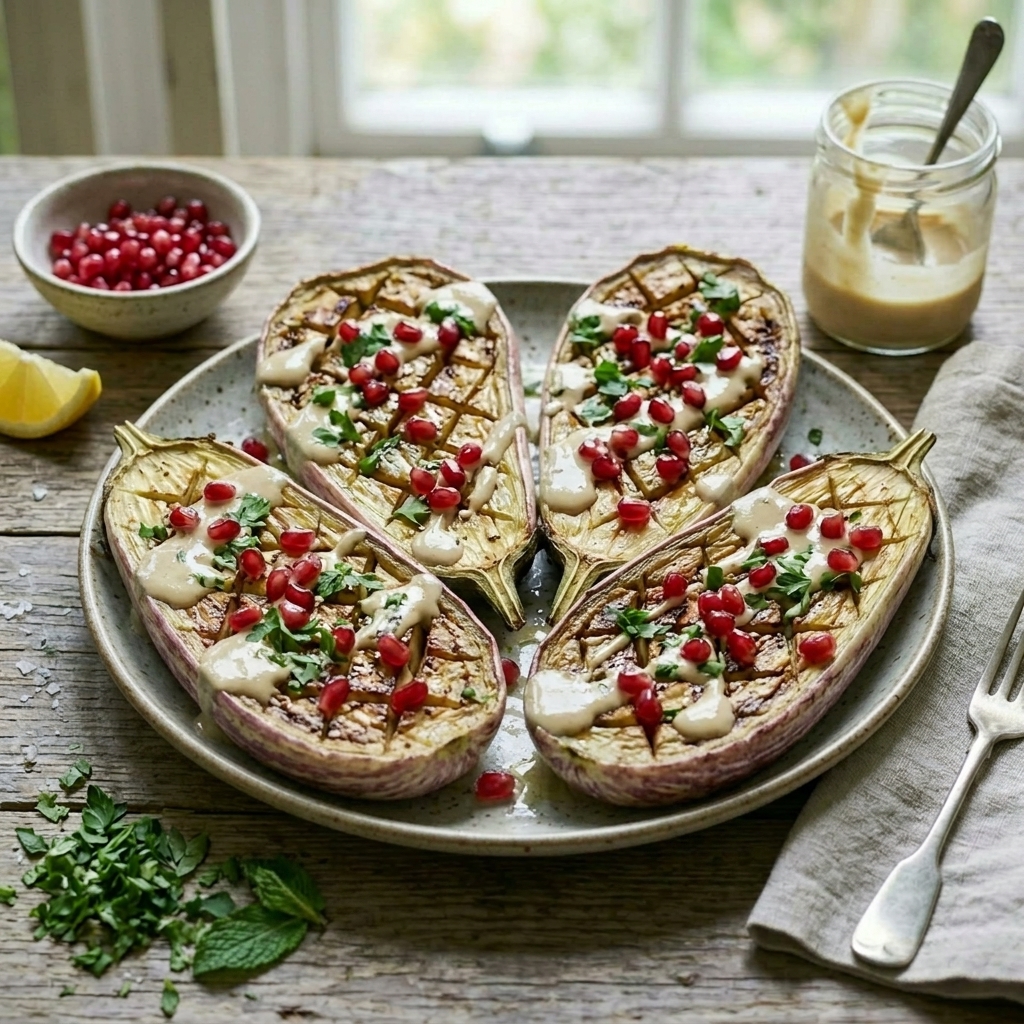
The Rosa Bianca's generous size makes it perfect for roasting in halves until meltingly tender. This serves 4 as a side.
Ingredients
- 2 large Rosa Bianca eggplants, halved lengthwise
- 3 tbsp olive oil
- Salt and pepper, to taste
- 2 tbsp tahini
- Juice of 1/2 lemon
- 1 small garlic clove, finely grated
- 2–3 tbsp water, to thin
- Pomegranate seeds and chopped parsley, to garnish
Instructions
- Score and oil. Heat oven to 425°F. Score the cut sides of the eggplant halves in a crosshatch pattern, then brush generously with olive oil and season with salt and pepper.
- Roast. Place cut-side down on a lined baking sheet and roast for 25–35 minutes, until the flesh is deeply tender and golden.
- Make the sauce. Whisk together tahini, lemon juice, garlic, and a pinch of salt, adding water a tablespoon at a time until smooth and drizzle-able.
- Finish. Flip the eggplant halves cut-side up, drizzle with tahini sauce, and scatter with pomegranate seeds and parsley. Serve warm.
More Ways to Use the Rosa Bianca
- Baba ganoush: Its creamy, custardy flesh roasts and blends into a silky-smooth dip.
- Eggplant Parmesan: Thick, meaty slices hold up well to breading and baking.
- Stuffed eggplant: Hollow out the halves and fill with grains, herbs, and cheese.
- Ratatouille: Cube and simmer with tomatoes, zucchini, and peppers for a classic stew.
- Grilled steaks: Cut into thick rounds and grill as a hearty plant-based "steak."
Gretel: The Charming Mini Eggplant
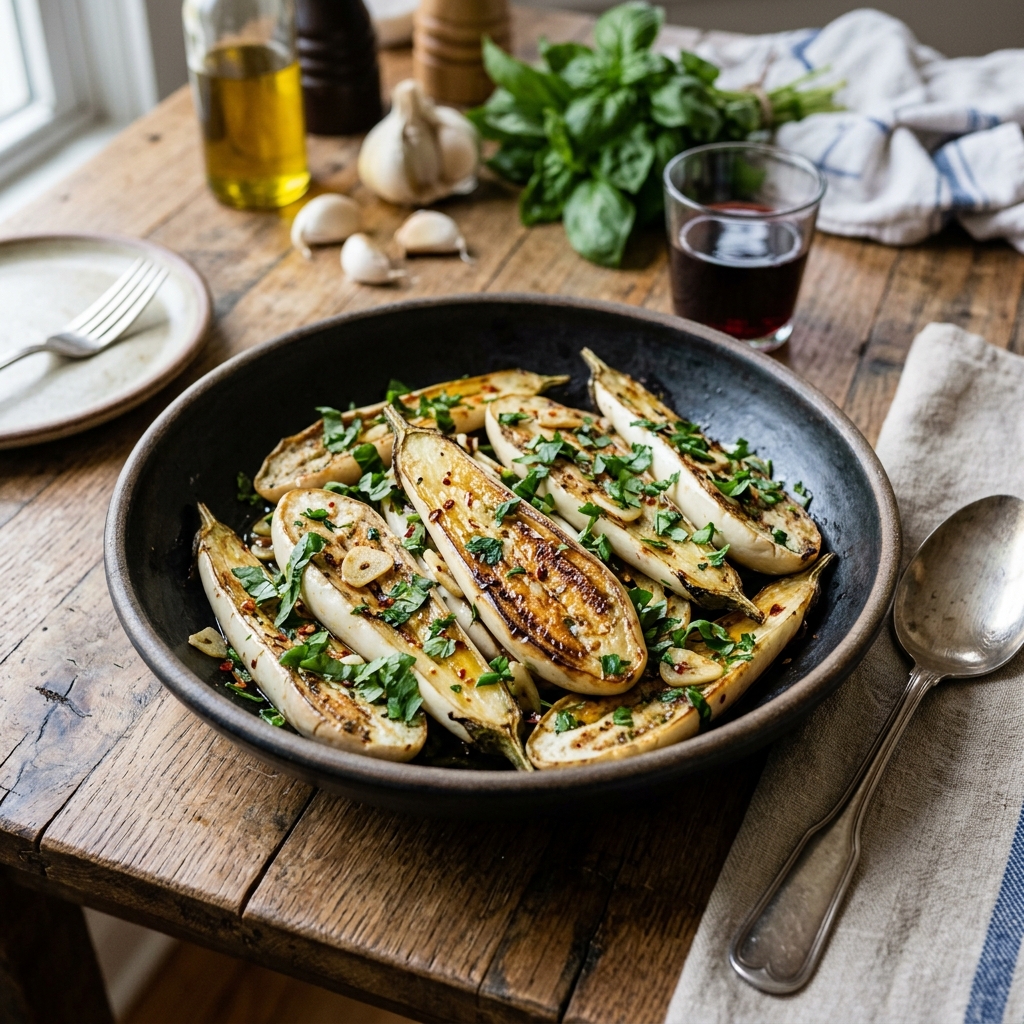
Gretel is the little one of the bunch — a snow-white mini eggplant that grows in adorable clusters and is harvested young. Don't let its small size fool you, though; this is a flavor-packed variety that's as versatile as it is cute.
Unique Characteristics
Gretels are small, finger-length, and bright white, with thin skin and a near-seedless interior. Their petite size means they cook quickly and need no peeling, salting, or fuss.
Flavor Profile
Sweet, mild, and tender with almost no bitterness. Their thin skins crisp up beautifully, while the inside stays creamy.
Nutrition
Harvested young, Gretels are tender and fiber-rich, delivering antioxidants and potassium in a low-calorie, bite-sized package — perfect for quick, healthy cooking.
Recipe: Quick-Sautéed Gretel Eggplants with Garlic
Because Gretels are small and quick-cooking, they're ideal for a fast, high-heat sauté — no salting or pre-roasting required. This serves 2–4 as a side and comes together in about 15 minutes.
Ingredients
- 10–12 Gretel eggplants, halved lengthwise
- 2 tbsp olive oil
- 2 garlic cloves, thinly sliced
- Salt and pepper, to taste
- Pinch of red pepper flakes (optional)
- Fresh basil or parsley, to finish
Instructions
- Heat the pan. Place a large skillet over medium-high heat and add the olive oil. Let it get hot and shimmering.
- Sear. Add the Gretel halves cut-side down in a single layer. Cook undisturbed for 2–3 minutes, until golden, then toss and cook another 2–3 minutes until tender.
- Add garlic. Stir in the sliced garlic and red pepper flakes, cooking for 30–60 seconds until fragrant but not browned.
- Finish. Season with salt and pepper, scatter with fresh herbs, and serve hot.
More Ways to Use Gretel
- Roasted whole: Toss with oil and roast until golden for an easy snack or side.
- Grilled on skewers: Their small size makes them perfect for the grill, whole or halved.
- Tempura or lightly battered: Quick-frying turns the thin skins delightfully crisp.
- Pickled: Their bite-sized shape is ideal for a jar of quick refrigerator pickles.
- Tossed in curries: Add whole or halved to a coconut curry, where they soak up the sauce.
Three Eggplants, Endless Possibilities
What we love about growing E-tender, Rosa Bianca, and Gretel side by side is how clearly they show off the eggplant's range. One you can slice and eat raw like a vegetable carpaccio. One you roast into something rich and custardy. And one you can toss in a pan for a quick, sweet, weeknight side. Same family, three completely different experiences.
Once you start thinking about eggplant by variety — matching the size, skin, and tenderness to the way you want to cook it — you unlock a whole new world of possibilities far beyond the standard grocery-store globe.
Cooked up one of our eggplants? We'd love to see what you made — especially if you put your own spin on it.
Tag us with #emorymarketgardens