 Broderick Adams
We are back!
It is so nice to be writing for you all again after our peak season took most of my attention. Summer is settling in and slowing things down which is a welcome relief as we head into our fall garden preparations. One little burst of joy has been on my mind and has seemed to send a wave through our local markets so I thought it might be a great time to explore that summer treat and why we opt to grow it!
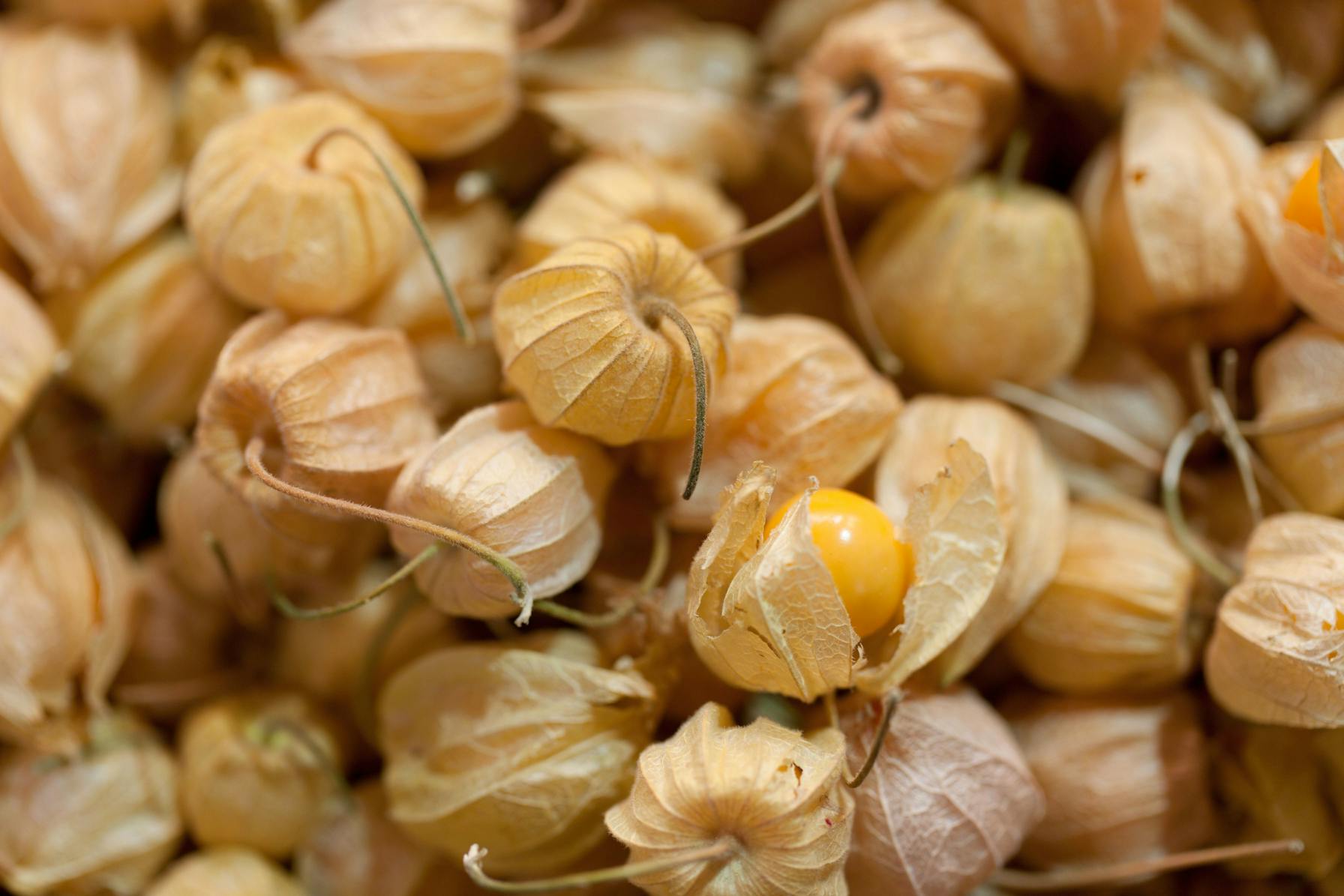
This week we dive into the delightfully odd world of Physalis pruinosa (and its close cousins)—the plant behind ground cherries, also called husk cherries, cape gooseberries, husk tomatoes, or my personal favorite regional nickname, "poha berries." These marble-sized golden fruits arrive wrapped in their own papery husk, drop to the ground when they're ripe, and taste like someone crossed a pineapple with a tomato and added a splash of vanilla. If that sounds strange, good. It is. Let's get into it.
The History of the Husk
Like so many of the foods we take for granted, ground cherries are a gift from the Americas. The Physalis genus is native to the Western Hemisphere, with its center of diversity in Mexico and Central America, where dozens of species grow both wild and cultivated. Ground cherries are members of the nightshade family (Solanaceae), which makes them relatives of tomatoes, peppers, potatoes, eggplants, and their famous cousin the tomatillo—another Physalis that everyone recognizes even if they've never connected the dots between that green husk and this golden one.
Indigenous peoples throughout Mesoamerica and South America gathered and cultivated Physalis species for centuries before European contact, using them as food and in traditional medicine. The Aztecs valued husk-wrapped fruits enough that they appear in early colonial-era records of Mexican markets alongside tomatoes and chiles.
When European ships began carrying New World plants back across the Atlantic in the 16th and 17th centuries, Physalis came along for the ride. One species in particular, Physalis peruviana, traveled from the Andes to South Africa's Cape of Good Hope, where it naturalized so successfully that it picked up the name "cape gooseberry"—a wonderfully misleading label, since the plant is neither South African nor a gooseberry. From there it spread to Australia, New Zealand, India, and Hawaii, where it became known as poha and worked its way into jams and jellies that are still local favorites.
Meanwhile, in North America, ground cherries became a quiet fixture of homestead gardening. Nineteenth-century seed catalogs listed them as "husk tomatoes" or "strawberry tomatoes," and settlers across the Midwest and Northeast grew them for pies and preserves. They never quite made the leap to commercial stardom—more on why in a moment—but they persisted in family gardens, passed along as saved seed for generations. Today they're enjoying a genuine renaissance among market gardeners and home growers who love a crop with a story.
Why You've Never Seen Them at the Supermarket
Here's the practical reason ground cherries remain a specialty item: the plant tells you the fruit is ripe by dropping it on the ground. That's not a defect—it's the whole harvest strategy, and it's where the common name comes from. Ripe fruits release from the plant and fall, protected from bruising and dirt by their papery husk, which acts like a natural shipping container. A grower walks the rows and picks them up off the soil.
Charming? Absolutely. Efficient for industrial agriculture? Not remotely. Ground cherries ripen unevenly over a long season, sprawl in every direction instead of growing in tidy rows, and require stoop labor to collect. Plant breeders have been working on more upright, uniform, easier-to-harvest varieties—there's even been gene-editing research aimed at "domesticating" the ground cherry the way tomatoes were domesticated over millennia—but for now, this remains a fruit you'll mostly find at farm stands, in CSA boxes, or in your own backyard.
What Do They Actually Taste Like?
This is the question everyone asks, and it's genuinely hard to answer because ground cherries don't taste like anything else in the produce aisle. The most common comparison is pineapple—there's a bright tropical tang up front—followed by something rounder and sweeter, like a mild cherry tomato that gave up on being savory. Underneath it all is a warm, almost butterscotch or vanilla note that lingers.
Texture matters here too. The skin is thin and gives way with a soft pop, and the interior is juicy with tiny edible seeds, much like a tomato. Ripeness makes an enormous difference: an underripe ground cherry is astringent and disappointing, while a fully ripe one is honeyed and complex. The husk is your guide—wait until it has dried to a papery tan and the fruit inside has turned deep golden-orange. Fruits that fall on their own are almost always ready.
One important note for the nightshade-curious: only eat ground cherries that are fully ripe. Unripe fruits and the plant's leaves and stems contain solanine-type compounds and shouldn't be eaten—the same principle that applies to green potatoes and tomato foliage. Ripe fruit, husk removed, is perfectly safe and delicious.
Nutritional Value
For such a tiny fruit, ground cherries carry a respectable nutritional résumé:
- Vitamin C: A solid dose of this antioxidant vitamin, supporting immune function and collagen production.
- Vitamin A and Carotenoids: The golden-orange color is a clue—ground cherries supply beta-carotene and related pigments that support eye health and healthy skin.
- B Vitamins: Notably niacin (B3) and thiamine (B1), which help the body convert food into usable energy.
- Fiber: Skin, pulp, and seeds all contribute dietary fiber for healthy digestion.
- Iron and Phosphorus: Present in modest but meaningful amounts for a fruit this size.
- Withanolides and Polyphenols: Physalis species contain unique plant compounds that have attracted real scientific interest for their antioxidant and anti-inflammatory activity.
- Low Calorie: Roughly 50 to 75 calories per cup depending on species and ripeness, making them a light, nutrient-dense snack.
Common Uses in the Kitchen
The simplest use is also the best: peel back the husk and eat them raw, one after another, until the bowl is empty. Most ground cherries never make it into a recipe for exactly this reason. But if you manage to save some, they're remarkably versatile:
- Fresh and Out of Hand: A snacking fruit, a lunchbox surprise, a garden-side reward for the person doing the weeding.
- Jams, Jellies, and Preserves: Their natural pectin and bright acidity make them excellent for canning. Hawaiian poha jam is the classic example.
- Pies and Baked Goods: "Husk tomato pie" was a genuine 19th-century American staple, and ground cherries still shine in crumbles, galettes, and tarts, often paired with apple or peach.
- Salads: Halved or whole, they add pops of sweet-tart brightness to green salads, grain bowls, and slaws—think of them as you would a cherry tomato with a tropical accent.
- Salsas and Chutneys: Their tomatillo kinship shows here. Combined with onion, chile, and lime, they make a fruity salsa that's excellent with fish or pork.
- Roasted or Blistered: Heat concentrates their sugars and deepens that caramel note. Wonderful spooned over ricotta, yogurt, or ice cream.
- Sauces and Reductions: Cooked down with a little sugar and vinegar, they become a glossy sweet-sour sauce for roasted meats.
- Garnish and Dessert Plating: Cape gooseberries with the husk peeled back into a decorative star are a classic pastry-shop flourish, sometimes dipped in chocolate or fondant.
Fun Facts About Ground Cherries
- Built-In Packaging: That papery husk is a modified calyx—the same structure that forms the little green cap on a tomato—which balloons outward as the fruit develops until it fully encloses it.
- The Harvest Tells You When: Ground cherries are one of the few crops where "it fell off" means "it's perfect."
- A Name for Every Region: Ground cherry, husk cherry, husk tomato, strawberry tomato, cape gooseberry, poha berry, golden berry, and Inca berry can all refer to closely related Physalis fruits.
- Neither Cape nor Gooseberry: The cape gooseberry is native to the Andes and belongs to the nightshade family, not the gooseberry family. It just naturalized so well in South Africa that the name stuck.
- Tomatillo's Sweet Sibling: Same genus, wildly different culinary destiny—one went into salsa verde, the other into pie.
- The Chinese Lantern Cousin: That bright orange ornamental plant in dried flower arrangements is Physalis alkekengi, a decorative relative grown for its showy husks rather than its fruit.
- Heirloom Survivors: Because they were never commercialized, most ground cherry varieties available today descend from seed saved and shared by home gardeners—an unbroken chain of hand-to-hand horticulture.
Why I Keep Coming Back to This One
Ground cherries are the kind of crop that reminds you how much of the plant world never made it onto a grocery shelf. They're not rare, they're not difficult, and they're not new—people have been eating them for thousands of years. They just don't ship well, and in a food system built around shipping, that was enough to keep them at the margins. Growing them feels a little like recovering something that was misplaced rather than lost. However, the top reason we love this summer treat is the excitement they bring to our customers that come by the booth to sample them. It is hard not to smile when that tiny but flavorfully mighty berry bursts into its signature flavor. We encourage you to stop by and try one for yourself if you don't believe me!
Stay Connected
Want more kitchen tips, vegetable spotlights, and updates from the garden?