 Broderick Adams
A Brief Briny History
Pickling is one of the oldest methods of food preservation, dating back more than 4,000 years. Long before refrigeration, people needed a way to make summer harvests last through winter. Ancient Mesopotamians are believed to have been among the first to pickle cucumbers, storing them in brine to preserve and transport food.
Pickles traveled the world with explorers and traders. The Romans loved them, and they spread across Europe as a staple for armies and sailors because of their long shelf life. In the Middle Ages, pickled foods were a lifeline during famine and harsh winters. By the time pickling reached North America, it had become a beloved tradition that continues in kitchens today.
Pickling Across Civilizations
Pickling didn’t belong to just one place. Many civilizations developed their own methods and flavors to preserve food, each leaving a delicious legacy:
- Ancient Egypt: Vegetables were pickled in brine and vinegar, both for preservation and as offerings in tombs.
- Ancient China: Fermented vegetables have been part of Chinese cuisine for over 2,000 years, with early forms of pickling leading to modern favorites like pickled mustard greens.
- India: Known for bold spice blends, Indian pickles (achar) date back thousands of years and use oil, salt, and spices to preserve mangoes, limes, and more.
- Korea: Kimchi, a staple for centuries, evolved from simple salted vegetables into today’s spicy fermented cabbage and radish dishes.
- Greece and Rome: Both cultures pickled vegetables and fruits in brine and vinegar, and Roman soldiers often traveled with pickled rations.
- Middle East: Pickled turnips, cucumbers, and beets have long been part of meals, often flavored with garlic and herbs.
- Eastern Europe: Sauerkraut, pickled beets, and fermented cucumbers sustained communities through long winters.
- Japan: Tsukemono, a variety of pickled vegetables, are served with nearly every meal to balance flavors.
- Africa: In regions like North Africa and Ethiopia, preserved lemons and spiced pickled vegetables became essential pantry staples.
- Indigenous Americas: Before European contact, native communities preserved foods using fermentation and brining techniques suited to local crops.
Fun Facts About Pickling
- Ancient Preservation Hack: Pickling was used thousands of years before the invention of canning or refrigeration.
- Sailor’s Secret: Pickles were carried on long sea voyages to help prevent scurvy.
- Not Just Cucumbers: Almost anything can be pickled—carrots, onions, green beans, beets, even eggs!
- Fermented vs. Vinegar: Traditional pickles are fermented in brine, while quick pickles use vinegar and are ready faster.
- Global Favorite: Every culture has a pickled food tradition, from kimchi in Korea to sauerkraut in Germany.
Benefits of Pickled Foods
- Longer Shelf Life: Pickling preserves vegetables for months, reducing food waste.
- Gut Support: The traditionally fermented pickles contain beneficial probiotics (when not pasteurized).
- Low Calorie, High Flavor: Pickles add big taste without much sugar or fat making them a great snack for those looking to cut some calories.
- Electrolytes: The brine contains sodium and potassium, which can help replenish electrolytes.
Bonus Recipe: Classic Quick Dill Pickles
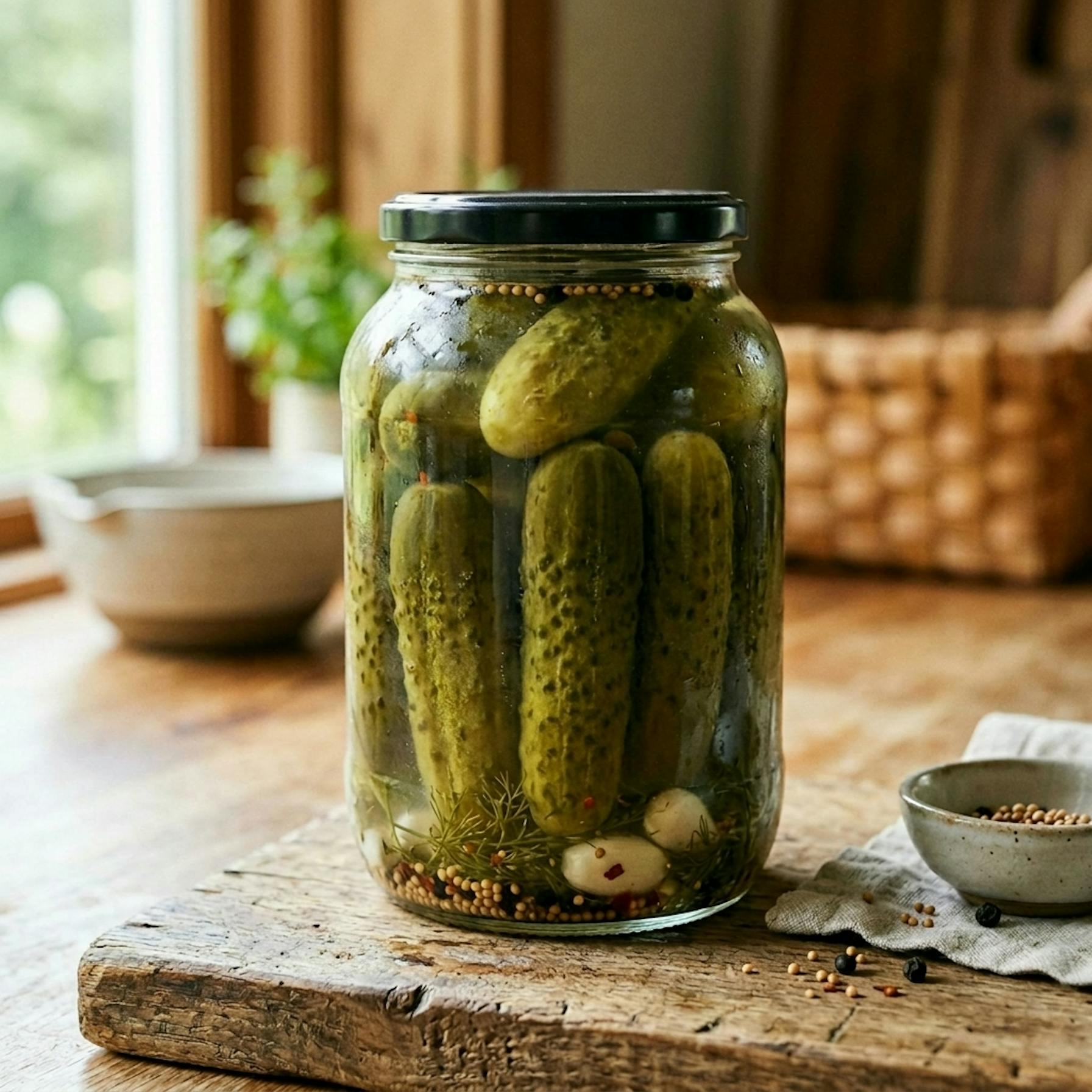
These crisp, garlicky dill pickles are a timeless classic. This quick refrigerator version skips canning for simplicity and flavor.
Ingredients:
- 4–6 small cucumbers (Kirby or pickling cucumbers)
- 2 cups water
- 2 cups white vinegar
- 3 tbsp kosher salt
- 2 tbsp sugar (optional)
- 4 cloves garlic, peeled
- 2 tsp dill seeds or 4 fresh dill sprigs
- 1 tsp black peppercorns
- 1/2 tsp red pepper flakes (optional)
Instructions:
- Prep: Wash cucumbers and trim the ends. Slice into spears or keep whole.
- Make Brine: In a saucepan, combine water, vinegar, salt, and sugar. Heat until dissolved, then let cool slightly.
- Pack Jars: Place garlic, dill, peppercorns, and red pepper flakes in clean jars. Pack cucumbers tightly.
- Pour: Add the brine to cover the cucumbers completely.
- Chill: Seal jars and refrigerate. Pickles are ready in 24–48 hours and improve over the next few days.
- Enjoy: Keep refrigerated for up to 3–4 weeks.
Stay Connected
Want more kitchen tips, food history, and garden updates?
Let us know—what tangy topic should we feature next?