 Broderick Adams
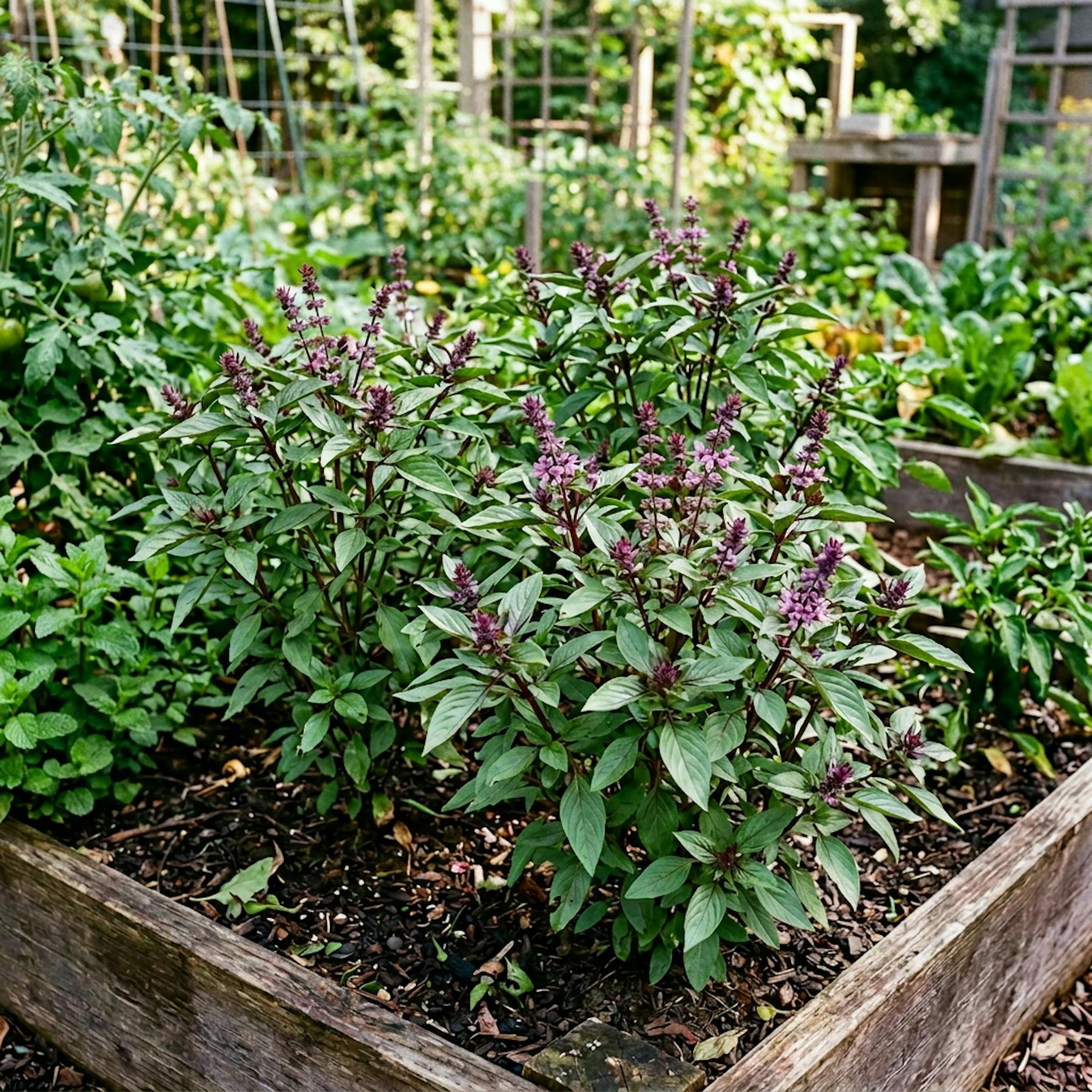
Thai basil is my personal favorite basil, and I always leave room in the garden for it. There’s just something about its bold, sweet-spicy aroma and those deep purple stems that makes it stand out from every other herb I grow. The first warm days of summer, when the plants take off and the leaves release that unmistakable anise-like scent. It’s one of those plants that is just as beautiful in the garden as it is useful in the kitchen—and it adds a nice variety to your spice rack.
What’s to Love About Thai Basil?
- That sweet, spicy, anise-like aroma
- Natural pest control in the garden
- Fast growth and beautiful purple stems
- Incredible flavor in stir-fries, curries, and soups
Garden Benefits
Thai basil isn’t just a culinary powerhouse—it’s a helpful companion plant too.
- Repels common garden pests like aphids and mosquitoes
- Attracts pollinators when it flowers
- Thrives in summer heat when other herbs slow down
Health Benefits of Thai Basil
Thai basil is more than a flavor booster—it brings a handful of traditional wellness perks to the table.
- Rich in antioxidants that help protect cells from oxidative stress
- Contains essential oils that have been traditionally used to support digestion
- May have mild anti-inflammatory and antimicrobial properties
- Provides vitamin K, vitamin A, and small amounts of minerals like iron and calcium
A Brief History of Thai Basil
Thai basil (Ocimum basilicum var. thyrsiflora) is native to Southeast Asia, with strong cultural roots in Thailand, Vietnam, Laos, and Cambodia. It has been used in regional cuisines for centuries, valued for its bold, anise-like flavor and its ability to stand up to heat in cooking. In Thai and Vietnamese food traditions, it’s a staple in soups, curries, stir-fries, and noodle dishes—often added fresh at the end for maximum aroma and taste. Its long history in the region makes it a beloved herb that continues to shine in modern kitchens and gardens alike.
How to Harvest for Best Flavor
- Snip stems above a node to encourage bushy growth
- Harvest in the morning for the strongest aroma
- Use fresh for the most vibrant flavor, or dry for later
Thai Basil Fried Rice Recipe
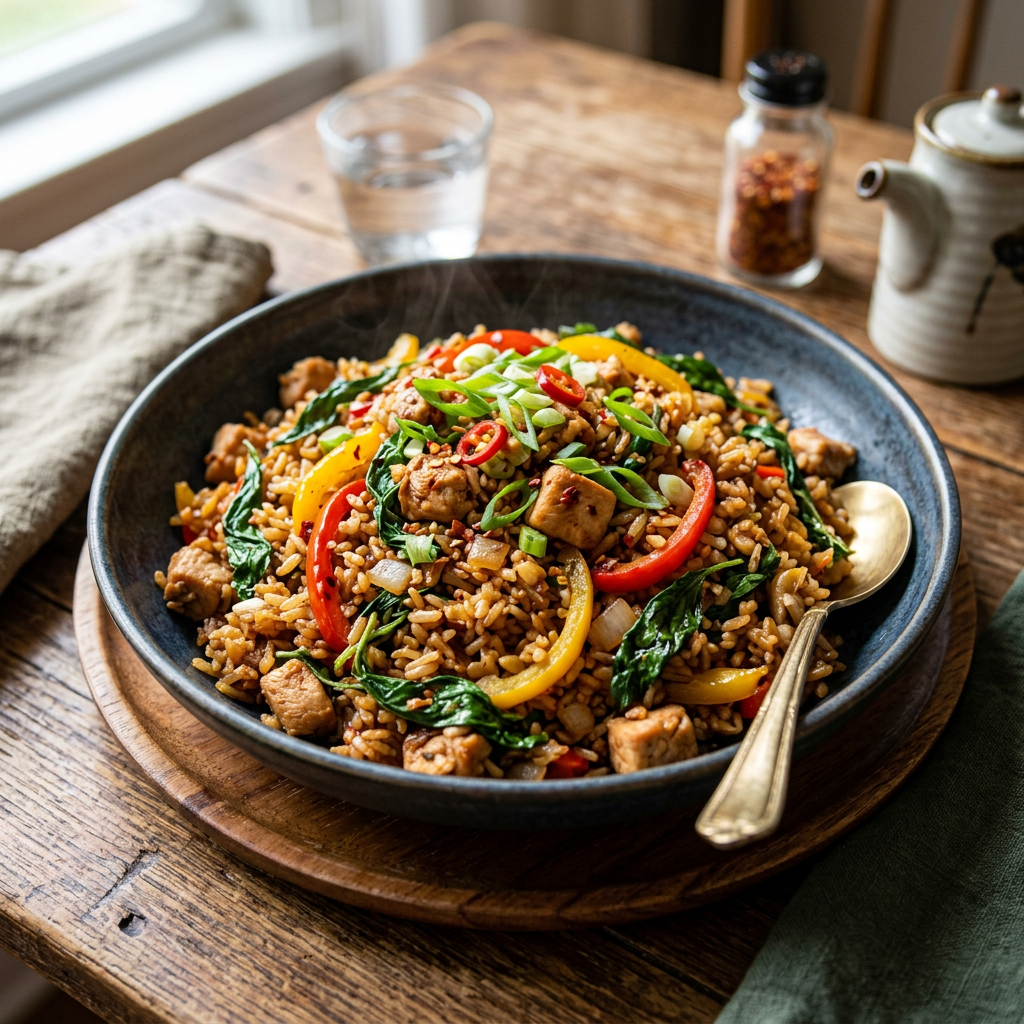
This is our go-to recipe when the garden is overflowing with basil and we need a quick, comforting dinner.
Ingredients
- 3 cups cooked jasmine rice (cold, day-old works best)
- 2 tablespoons sesame oil
- 2 cloves garlic, minced
- 1 small onion, diced
- 1 bell pepper, sliced
- 1 cup protein of choice (tofu, chicken, shrimp, or egg)
- 2 tablespoons soy sauce
- 1 tablespoon oyster sauce (optional)
- 1 teaspoon sugar
- 1–2 cups fresh Thai basil leaves
- Chili flakes or fresh chili to taste
- Green onions for garnish
Instructions
- Heat sesame oil in a large skillet or wok over medium-high heat.
- Add garlic and onion, sauté for 1–2 minutes until fragrant.
- Add bell pepper and protein, cook until just tender.
- Stir in cooked rice and break up any clumps.
- Add soy sauce, oyster sauce, sugar, and chili. Stir well.
- Turn off heat and stir in Thai basil leaves until just wilted.
- Add any additional soy sauce or chili paste.
- Top with green onions and serve hot.
Tips for the Best Fried Rice
- Cold rice prevents mushy texture
- High heat gives the best flavor
- Add basil at the end to preserve aroma
Let’s Grow and Cook Together
Thai basil is one of those plants that checks every box for me as a garden friend—beautiful, useful, and delicious.
Have you tried growing Thai basil? Do you have a favorite basil of your own? We'd love to hear about it. That's the best part of doing what we do is getting to share and learn with our community.
📸 Tag your photos with #emorymarketgardens
📍 Facebook: Emory Market Gardens
📍 Instagram: @emorymarketgardens
Happy growing! — The Emory Market Gardens Team