 Broderick Adams
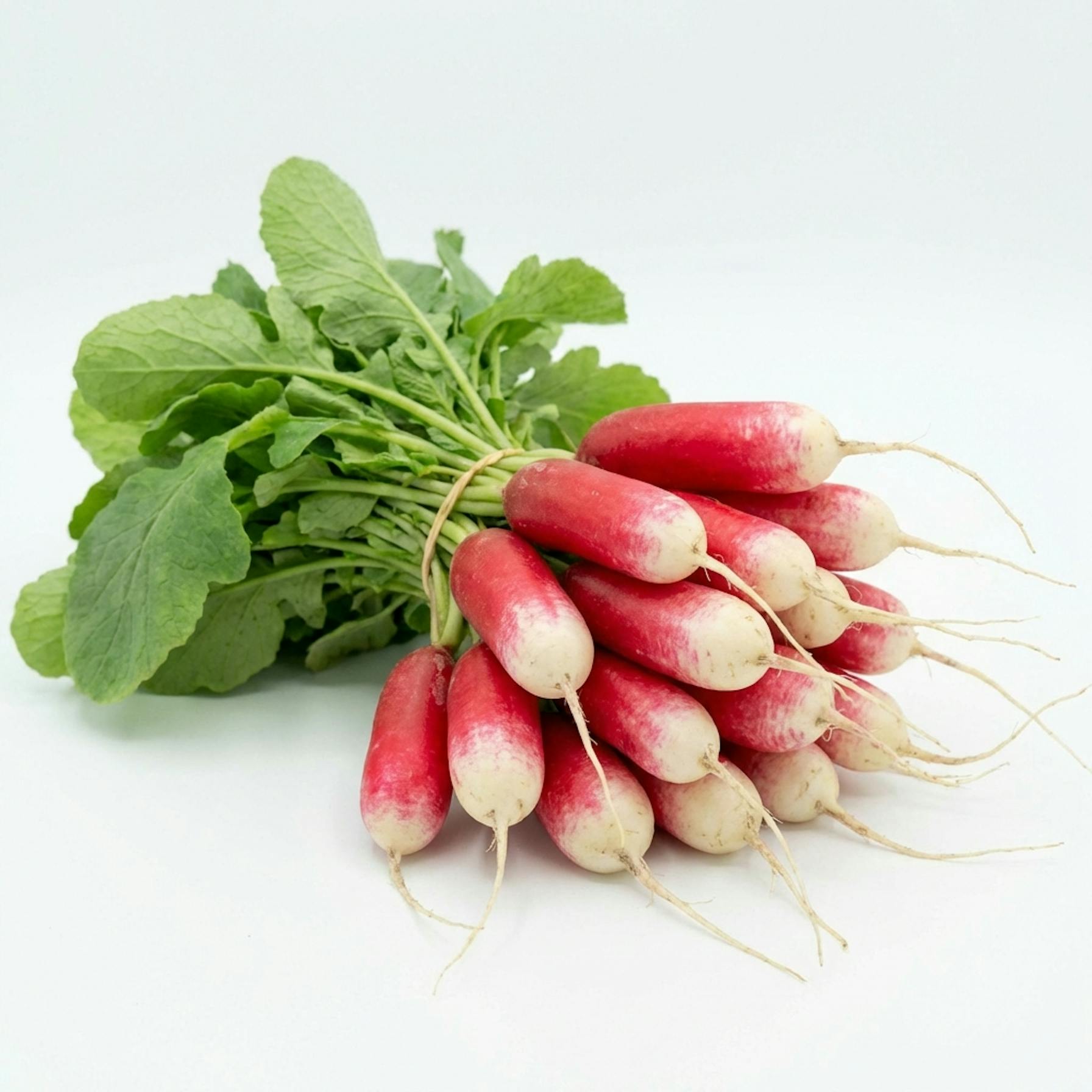
This week we dive into the charming world of the French Breakfast radish—that elongated, red-and-white beauty that has graced European breakfast tables for centuries. From Parisian markets to your morning plate, this dainty root vegetable has a story as delightful as its crisp bite.
A Brief History
The radish family has ancient origins, with evidence of radishes being cultivated in Egypt during the time of the Pharaohs—workers building the pyramids were even paid in radishes, onions, and garlic. Radishes then traveled through Greece and Rome, eventually spreading across Europe where different varieties developed over the centuries.
The French Breakfast radish, specifically, emerged in France during the 1800s. It was first documented in 1879, though it had likely been cultivated for some time before that. This elongated variety with its distinctive red body fading to a white tip became a staple in French markets and gardens, prized for its mild, less peppery flavor compared to its round red cousins.
The radish was so beloved in France that vendors would sell them freshly pulled from the earth at morning markets, and they became synonymous with the leisurely French breakfast tradition. By the late 19th century, French Breakfast radishes had made their way to American seed catalogs, where they quickly gained popularity among home gardeners and culinary enthusiasts alike.
Why Are They Called "Breakfast" Radishes?
The charming name of this radish variety comes directly from French culinary tradition. In 19th century France, it was customary for market vendors and workers to enjoy a mid-morning snack—a simple affair consisting of fresh radishes, good butter, and a sprinkle of flaky sea salt, often accompanied by crusty bread.
This tradition, known as "le petit déjeuner" (the little lunch), was a beloved ritual. Workers would dip the crisp, freshly harvested radishes into soft butter and salt, creating a perfect balance of peppery, creamy, and salty flavors. The elongated shape of this particular variety made it ideal for dipping—nature's perfect handle!
The mild, slightly sweet flavor of the French Breakfast radish, compared to spicier varieties, also made it more appealing for early morning consumption when palates tend to be more sensitive. This gentle introduction to the day earned the radish its "breakfast" designation, a name that has endured for well over a century.
Fun Facts About French Breakfast Radishes
- Speed Demons of the Garden: French Breakfast radishes are one of the fastest-growing vegetables, ready to harvest in just 20-25 days from seed—perfect for impatient gardeners!
- Edible from Top to Bottom: Don't throw away those greens! Radish tops are completely edible and can be sautéed, added to salads, or blended into pesto.
- Ancient Currency: Before coins were common in ancient Egypt, workers were sometimes paid in radishes, along with onions and garlic, for their labor on the pyramids.
- Color Indicator: The red color in French Breakfast radishes comes from anthocyanins, the same powerful antioxidants found in blueberries and red cabbage.
- Cool Weather Champions: These radishes thrive in cooler temperatures, which is why they're often among the first and last crops of the growing season.
Nutritional Value
Don't let their small size fool you—French Breakfast radishes pack an impressive nutritional punch. These little gems are considered a nutrient-dense food, meaning they provide significant health benefits for very few calories:
- Digestive Health: High in fiber and water content, radishes support healthy digestion and help maintain regularity.
- Vitamin C Boost: Just a half-cup of radishes provides about 14% of your daily Vitamin C needs, supporting immune function and skin health.
- Natural Detoxifier: Radishes contain compounds that support liver function and help flush toxins from the body.
- Blood Sugar Support: With a low glycemic index and compounds that may help regulate blood glucose, radishes are diabetes-friendly.
- Hydration Hero: Composed of about 95% water, radishes are excellent for staying hydrated while snacking.
- Anti-inflammatory Properties: Contains natural compounds called isothiocyanates that have been studied for their anti-inflammatory effects.
Bonus Recipe: Classic French Radishes with Herb Butter
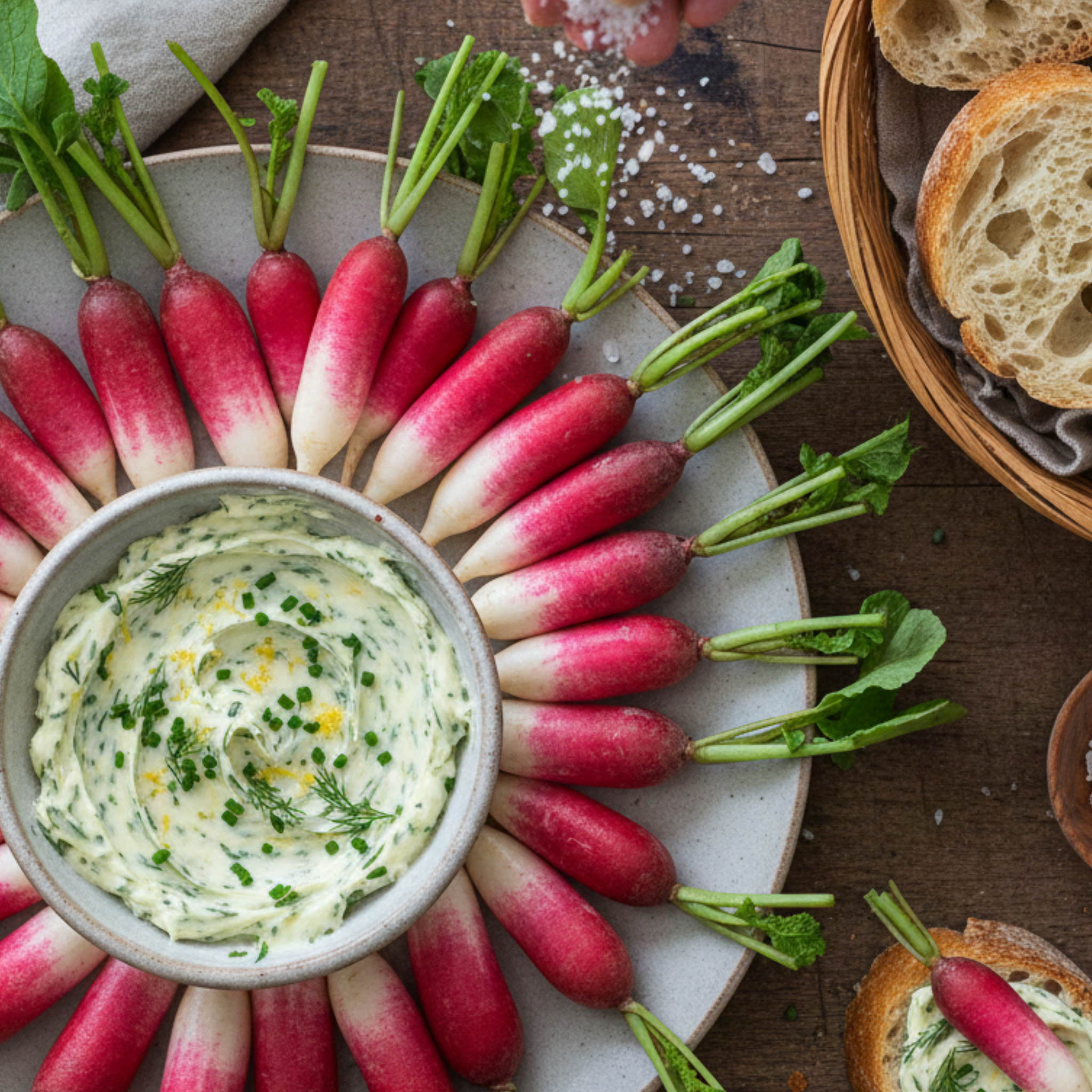
Honor the traditional French breakfast experience with this simple yet elegant preparation. The combination of peppery radishes, creamy herb butter, and flaky salt is pure magic.
Ingredients:
- 1 bunch French Breakfast radishes (about 10-12), washed with greens trimmed to 1 inch
- 4 tbsp high-quality unsalted butter, softened
- 1 tbsp fresh chives, finely minced
- 1 tsp fresh dill, finely chopped
- Zest of half a lemon
- Flaky sea salt
- Fresh crusty baguette, sliced
Instructions:
- Prepare the Butter: In a small bowl, combine the softened butter with chives, dill, and lemon zest. Mix until well incorporated. Season with a pinch of regular salt.
- Chill Slightly: If the butter is too soft, refrigerate for 10-15 minutes until it holds its shape but is still easily spreadable.
- Prep the Radishes: Wash your French Breakfast radishes thoroughly. Leave about an inch of the green tops attached—they make a beautiful handle for dipping. Pat dry with a clean towel.
- Arrange: Place the herb butter in a small serving bowl. Arrange the radishes on a platter alongside sliced baguette.
- Serve: To eat, spread herb butter on a slice of baguette or directly onto a radish, then dip the radish in the butter and finish with a sprinkle of flaky sea salt. Enjoy the perfect balance of creamy, peppery, and salty!
Chef's Tip: For an extra refreshing touch, soak your cleaned radishes in ice water for 30 minutes before serving. This makes them extra crisp and reduces any bitter edge.
Stay Connected
Want more kitchen tips, vegetable spotlights, and updates from the garden?
Let us know—what vegetable should we should feature in our next blog? We love hearing from our community!